Network General 1T6-530 Exam Questions
1T6-530 TCP/IP Network Analysis and Troubleshooting

Updated On: 17-May-2026

QUESTION: 1
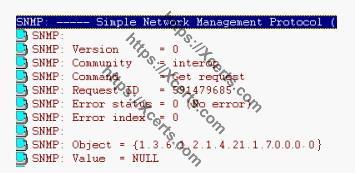
The image below is a view of a Sniffer Detail window.

What was the frame data shown in the il ustration sent by?

A. Agent
B. Manager
C. Requester
D. MIB
Answer(s): B
QUESTION: 2
POP3 protocol has which of the following capabilities?

A. Message retrieval
B. Sending new messages from server to server
C. Message forwarding
D. Message creation
Answer(s): A
QUESTION: 3
What steps are helpful in determining the source of slow response times across multiple
segments? Select all that apply

A. Line up the frames in the Detail window
B. Analyze ART graphs for each segment
C. Capture on each network segment if possible
D. Compare the delta times between frames on each segment
Answer(s): A, C
QUESTION: 4
The relationship of ports, addresses and sockets is best represented by which of the following
statements?


2

Overview of the 1T6-530 TCP/IP Network Analysis and Troubleshooting Exam

Network engineers and systems administrators pursuing the 1T6-530 certification must demonstrate advanced proficiency in deconstructing complex TCP/IP protocol suites and OSI layer architecture. The curriculum mandates deep-packet inspection and diagnostic competency using the Sniffer platform to identify latency, retransmissions, and congestion within multi-vendor enterprise infrastructures. Candidates analyze ARP, ICMP, DHCP, DNS, and HTTP traffic patterns to pinpoint routing inefficiencies and security anomalies. Successful assessment requires mastery of statistical baselining, traffic flow visualization, and root-cause resolution within switched and routed topologies. Proficiency in identifying encapsulation errors and TCP state machine irregularities is essential for maintaining robust, high-performance wide area network connectivity.


Network General 1T6-530: Skills Tested, Job Roles, and Study Tips

The 1T6-530 TCP/IP Network Analysis and Troubleshooting certification is designed for network engineers, systems administrators, and technical support specialists who are responsible for maintaining the health and performance of complex network infrastructures. Professionals who hold this credential demonstrate a high level of proficiency in diagnosing connectivity issues, interpreting packet captures, and optimizing traffic flow within TCP/IP environments. Organizations that rely on Network General tools for their infrastructure monitoring often seek out certified individuals to ensure that their teams can effectively resolve outages and latency problems. This certification serves as a validation of a candidate's ability to apply theoretical networking knowledge to real-world troubleshooting scenarios. By achieving this status, IT professionals prove they possess the technical depth required to manage critical network segments and support enterprise-level operations.

Employers value this certification because it confirms that a candidate understands the intricacies of the TCP/IP protocol suite beyond basic configuration. In a professional setting, the ability to perform deep packet inspection and analyze protocol behavior is essential for security auditing and performance tuning. Network General certification holders are frequently tasked with identifying bottlenecks, detecting unauthorized traffic patterns, and ensuring that network services remain available to end users. This role requires a blend of analytical thinking and technical expertise, as the candidate must often correlate data from multiple sources to pinpoint the root cause of intermittent network failures. Consequently, passing this exam is a significant milestone for those looking to advance into senior network administration or specialized troubleshooting roles.

What the 1T6-530 Exam Covers

The 1T6-530 exam focuses on the practical application of network analysis techniques, requiring candidates to interpret data streams and understand the underlying mechanics of TCP/IP communication. The curriculum covers essential areas such as packet analysis, protocol behavior, and the use of diagnostic tools to isolate network faults. Candidates must demonstrate a clear understanding of how different layers of the OSI model interact during data transmission and how to identify anomalies at each stage. Our practice questions are designed to mirror these core competencies, ensuring that you are tested on the same concepts you will encounter during the actual assessment. By working through these scenarios, you will gain experience in identifying common network errors, such as retransmissions, latency issues, and configuration mismatches that frequently plague enterprise networks.

The most technically demanding aspect of the 1T6-530 exam involves the interpretation of complex packet traces and the correlation of diagnostic data. Candidates are often presented with scenarios where they must analyze raw data to determine why a specific application is failing or why a connection is being dropped. This requires a deep understanding of TCP handshakes, windowing mechanisms, and error recovery processes. Mastering this area is difficult because it demands that the candidate move past simple memorization and instead apply logical deduction to solve the problem. Success in this domain is critical, as it represents the core function of a network analyst who must provide actionable insights based on technical evidence.

Are These Real 1T6-530 Exam Questions?

Our platform provides access to practice questions that are sourced and verified by the community, including IT professionals and recent test-takers who have sat for the actual exam. These individuals contribute their knowledge to ensure that our questions reflect what appears on the real exam because they are sourced from the community. If you have been searching for 1T6-530 exam dumps or braindump files, our community-verified practice questions offer something more valuable. Each question is verified and explained by IT professionals who recently passed the exam, providing you with context that static files cannot match. We prioritize accuracy and educational value, ensuring that you are learning the material rather than simply memorizing patterns.

Community verification works through a collaborative process where users discuss answer choices, flag potentially incorrect information, and share context from their recent exam experience. When a question is flagged, our community of experts reviews the content to ensure it aligns with the current exam objectives and technical standards. This feedback loop is what makes the questions reliable and helpful for your exam preparation. By engaging with these discussions, you gain access to multiple perspectives on how to approach difficult problems, which is far more effective than relying on unverified sources.

How to Prepare for the 1T6-530 Exam

Effective exam preparation for the 1T6-530 requires a combination of hands-on practice and a solid understanding of networking theory. We recommend setting up a lab environment where you can capture and analyze traffic, as this will help you visualize the concepts covered in the Network General certification. It is important to prioritize understanding the underlying protocols over rote memorization, as the exam often tests your ability to apply knowledge to new situations. Every practice question includes a free AI Tutor explanation that breaks down the reasoning behind the correct answer, so you understand the concept, not just the answer. Creating a consistent study schedule that allows you to review these explanations will significantly improve your retention of the material.

A common mistake candidates make is focusing too heavily on memorizing question patterns rather than mastering the technical concepts. The 1T6-530 exam is designed to test your ability to troubleshoot, which means you must be prepared for scenario-based questions that require critical thinking. To avoid this pitfall, you should treat each practice question as a learning opportunity by reading the AI Tutor explanation even if you answered correctly. Additionally, time management is a crucial skill to develop during your exam prep, so practice answering questions within a set timeframe to ensure you are comfortable with the pace of the actual certification exam. By focusing on the "why" behind each answer, you will be better equipped to handle variations of these questions on test day.

What to Expect on Exam Day

On the day of your 1T6-530 exam, you should expect a professional testing environment that adheres to strict security protocols. The exam typically consists of a variety of question formats, including multiple-choice and scenario-based questions that require you to apply your knowledge of network analysis. You will be given a specific amount of time to complete the assessment, and it is important to manage your time wisely across all sections. Most Network General certification exams are administered through authorized testing centers or via secure online proctoring services, ensuring a standardized experience for all candidates. Familiarize yourself with the testing interface beforehand if possible, as this will help you focus entirely on the technical content during the exam.

Who Should Use These 1T6-530 Practice Questions

These practice questions are intended for network engineers, systems administrators, and IT support professionals who are actively pursuing the 1T6-530 certification. Candidates typically have a few years of experience in network management and are looking to formalize their skills or advance their careers by obtaining this recognized credential. Whether you are preparing for your first attempt or looking to refresh your knowledge, these resources are designed to support your exam preparation journey. Passing this certification exam can lead to new opportunities in specialized network analysis roles, making it a valuable investment for your professional growth. We encourage anyone serious about mastering TCP/IP troubleshooting to utilize these materials to build a strong foundation of knowledge.

To get the most out of these practice questions, do not simply read the answer and move on to the next item. Engage with the AI Tutor explanation to understand the logic, read the community discussions to see how others approached the problem, and flag any questions you got wrong so you can revisit them later. This active learning approach is the most effective way to prepare for the rigors of the actual exam. By consistently reviewing your weak areas and leveraging the collective knowledge of our community, you will build the confidence needed to succeed. Browse the questions above and use the community discussions and AI Tutor to build real exam confidence.